

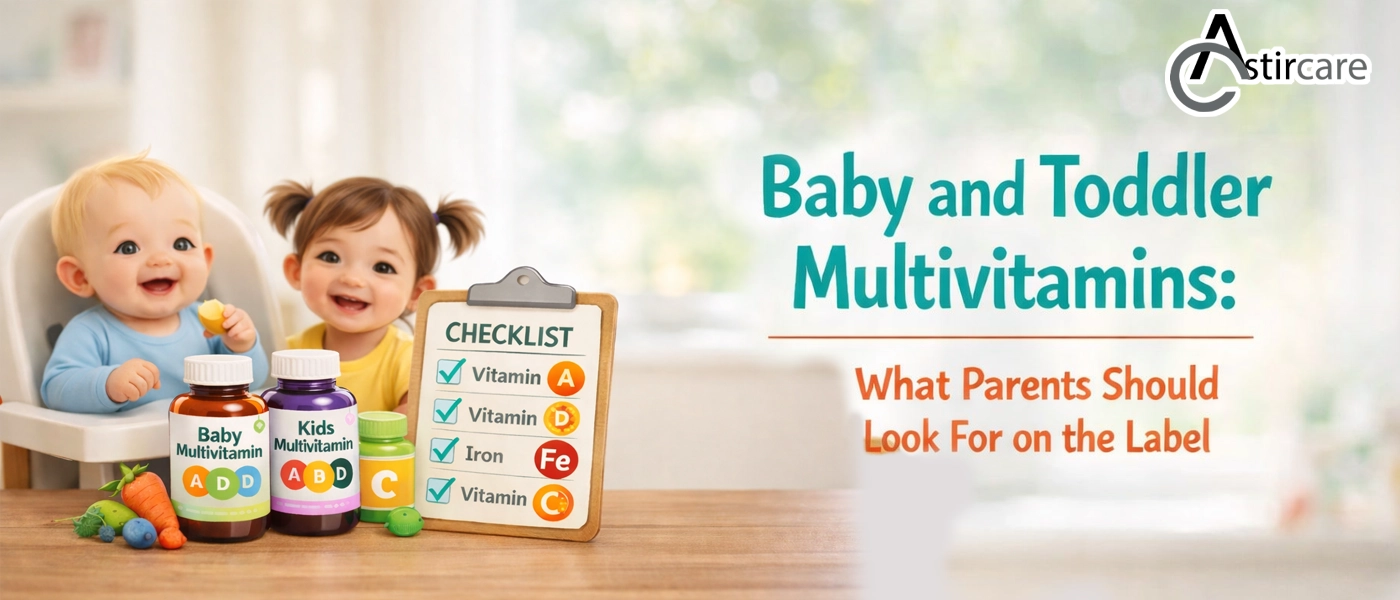
Baby and Toddler Multivitamins: What Parents Should Look For on the Label
31 Dec 2025You stand in the kitchen. Your toddler pushes away three bites, demands “snack,” and leaves half the plate cold. Chaos builds inside you, yet you breathe steady. Meals fall short on rushed days. You grab the children’s multivitamin liquid from the counter and flip to the label. Vitamin D3 stares back. Iron follows. “5ml daily.” Numbers blur without context. Parents face this daily. You scan baby multivitamins and toddler multivitamins for answers, but labels hide the real choices. This guide breaks them open with exact steps.
The 30-second label scan
-
Start with the age range line.
-
Match the product to your child’s stage (baby vs toddler), since labels set dose and use by age.
-
Skip any baby vitamins that hide age guidance in fine print, since you need clarity before you buy.
-
-
Check the format and the dose tool.
-
Choose baby vitamin drops when a dropper routine fits your day, since drops often pair well with milk or water.
-
Choose children’s multivitamin liquid when a spoon routine fits your day, since liquids often use a 5ml teaspoon dose on the directions panel.
-
-
Read “Directions” before you read claims.
-
Confirm the daily amount and timing, since consistency drives results more than marketing language.
-
Look for mixing guidance (milk, water, food), since the label sets the real-life use case.
-
-
Scan the “per daily serving” panel next.
-
Compare products by daily serving, not by bottle size, since you give servings, not packaging.
-
Confirm units (mcg, mg, IU) on each key nutrient line, since unit swaps change meaning.
-
-
Finish with storage and expiry.
-
Check “use by” and storage instructions, since liquids often need stable handling after opening.
-
Baseline nutrients to expect
-
Use UK guidance as the baseline filter.
-
The NHS states that children aged 6 months to 5 years get daily supplements containing vitamins A, C, and D.
-
The NHS states that breastfed babies from birth to 1 year get a daily vitamin D supplement of 8.5–10 micrograms.
-
The NHS states that children aged 1 to 4 years get a daily supplement containing 10 micrograms of vitamin D.
-
-
Translate guidance into a label action.
-
Find vitamin A, vitamin C, and vitamin D on the active ingredients list, since front labels often summarise.
-
Look for vitamin D as “D3” or “cholecalciferol” when the label lists forms, since form names help comparisons across brands.
-
-
Watch the formula-fed note before you add drops.
-
The NHS notes that babies who take infant formula may not need vitamin drops if they drink 500ml (about a pint) or more of formula per day.
-
Priority nutrients
-
Decide on vitamin D first.
-
Match the daily vitamin D amount to your child’s age guidance, since vitamin D drives many parent purchase decisions in the UK.
-
Confirm the daily dose size beside the vitamin D line, since “per 5ml” differs from “per 1ml.”
-
-
Decide on iron with extra care.
-
The Vitabiotics Wellbaby product page states that iron contributes to normal cognitive development.
-
Use that claim as a cue to verify the iron dose on the label, since dose matters more than claim wording.
-
Avoid stacking iron from two sources, since too much of some vitamins and minerals harms health.
-
-
Decide on “nice to have” nutrients last.
-
Pick one clear goal (baseline A, C, D coverage; vitamin D focus; iron inclusion), since adding extra targets increases overlap risk.
-
Use the label to confirm the product fits your goal, since “immune” and “growth” claims often share the same nutrient base.
-
Ingredient-list red flags (and how to spot them fast)
-
Check added sugars and sweet bases.
-
The Wellbaby ingredient list includes raw cane sugar and malt extract, so sweetness may appear even in products aimed at young children.
-
Scan the first five ingredients for sugars, since early placement often signals a higher quantity.
-
-
Check allergen sources inside brackets.
-
The Wellbaby ingredient list specifies malt extract (from barley), so bracket notes reveal allergen sources.
-
Search for wheat, barley, milk, soy, and nuts in the ingredient list, since labels often flag sources near the ingredient name.
-
-
Check stabilisers and preservatives without panic, with clarity.
-
The Wellbaby ingredient list includes xanthan gum and potassium sorbate, which often support texture and shelf stability in liquids.
-
Decide what you accept in advance, since changing rules mid-shop wastes time and creates doubt.
-
-
Verify “free from” claims against ingredients.
-
The Wellbaby page states “no artificial colours, flavours or sweeteners” and lists vegetarian suitability, so the product positions around exclusions and suitability.
-
Use that statement as a cross-check prompt, since the ingredient list gives the final proof.
-
Numbers without the stress (dose, units, and comparisons)
-
Lock onto one comparison method: daily serving.
-
The Wellbaby directions specify 1 teaspoonful (5ml) daily, so “per 5ml” becomes the correct basis for comparison against similar liquids.
-
Compare two children’s multivitamin liquid options using daily serving lines, since bottle volume does not reflect daily intake.
-
-
Keep vitamin D units consistent.
-
The NHS expresses vitamin D guidance in micrograms for babies and young children, so matching micrograms on the label keeps comparisons clean.
-
Convert only when you must, since conversions add error when you rush.
-
-
Stop overlap before it starts.
-
The NHS advises against giving children two vitamin supplements at the same time, since an excess of some vitamins harms health.
-
List every supplement your child takes on one note, then compare labels against that list before you add a new product.
-
Safety and suitability checks parents forget
-
Follow the age band as written.
-
The Wellbaby page states an age range “from 6 months to 4 years,” so the brand ties dose and use to that band.
-
Keep dosing aligned to the label, since improvised “half doses” create uncertainty and inconsistency.
-
-
Match mixing advice to your household routine.
-
The Wellbaby directions recommend mixing into usual milk or water, so the label expects a drink-based routine.
-
Pick a format your child accepts daily, since missed days erase the benefit of the “best” label.
-
-
Use professional support for edge cases.
-
The NHS recommends advice from a health visitor or GP for children with special dietary needs, which includes many medical or feeding situations.
-
Find Your Fit Now
You decode labels in seconds. Age band leads. Nutrients follow. Ingredients close the check. Astir Care stocks Vitabiotics Wellbaby Multi-Vitamin Liquid (6 months+, 5ml daily, D3 + iron, 29% off) and BioGaia Protectis Baby Drops (digestion focus, drops format). We deliver trusted baby vitamins and toddler multivitamins fast. Compare labels side-by-side in our baby vitamins category. Pick age, format, dose. Add to cart. Build the routine that sticks.



Leave a Comment