

Baby and Toddler Multivitamins: What Parents Should Look For on the Label
31 Dec 2025At 1:00 a.m., your baby bites your finger and cries again. A small white edge presses through swollen gums, and everyone feels the strain. You grab the teething ring from the fridge with one hand and scroll through teething gel options with the other. Each label sounds helpful, yet age limits and warnings blur together. This guide slows everything down. It walks through at‑home teething pain relief, from natural teethers to oral gels and medicine. You see what each option does, where it fits, and where it stops. You finish with a clear plan for tonight and the next tooth.
Teething pain basics
-
Teething pain often shows as sore gums, extra drool, red cheeks, and a strong urge to chew on anything within reach.
-
Chewing places steady pressure on sore gums, which distracts the brain from sharp discomfort and gives short bursts of relief.
-
Many babies move through cycles of calm days and restless nights as teeth shift under the surface, so symptoms rise and fall rather than stay constant.
-
Start any teething plan with home comfort steps such as chewing and cooling before you reach for medicine, since simple measures often ease mild pain on their own.
-
Keep expectations realistic: no single remedy stops every cry, so a mix of tools helps you adjust to your baby’s pattern.
Natural teethers that help
-
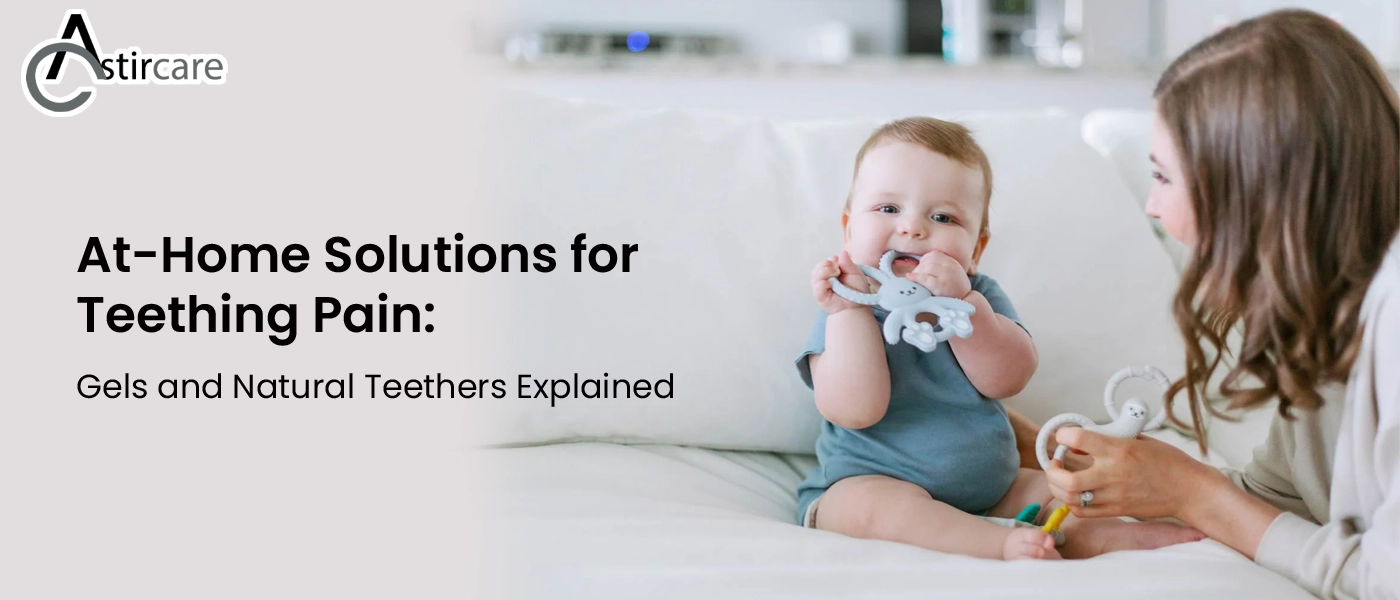
Offer a sturdy teething ring so your baby chews on a safe surface instead of fingers, cloth corners, or random objects.
-
Chill the teething ring in the fridge to cool the surface and soothe swollen gums, but avoid the freezer so the ring does not become too hard.
-
Use a clean, damp washcloth that you cool in the fridge as a soft, natural teether, and let your baby chew while you stay close.
-
During weaning, offer age‑appropriate crunchy foods such as peeled carrot sticks only when a health professional confirms they are safe for your baby’s stage and you can supervise every bite.
-
Keep one teether in the changing bag and one at home, so you always have a safe chewing option when fussiness starts in the car, pram, or supermarket.
-
Clean teethers after each day of use with warm soapy water, rinse well, and air‑dry, since constant chewing brings saliva and floor germs onto every surface.
Cooling rules and safety checks
-
Store teething rings in the main part of the fridge rather than the freezer, because frozen rings can bruise or damage tender gums.
-
Follow any brand‑specific chilling time and care instructions on the packaging so the teether keeps its shape and stays safe to bite.
-
Never tie a teething ring to clothing or around your baby’s neck, since loops and cords raise the risk of strangulation or choking.
-
Choose teethers made from one solid piece without small parts or seams that can break off during strong chewing.
-
Check every teether before use for cracks, leaks, or rough edges, and replace damaged products rather than trying to repair them.
-
Rotate at least two teethers so one chills while the other stays ready, which keeps you from rushing to the freezer in the middle of a crying spell.
Gum massage and comfort routines
-
Gently rub your baby’s gums with a clean finger or soft silicone brush for a short time, since direct pressure can ease soreness.
-
Wipe drool from the chin, neck, and chest with a soft cloth, then pat the skin dry to lower the risk of dribble rash on sensitive areas.
-
Offer extra cuddles, songs, or quiet play, as a distraction often shifts your baby’s focus away from gum pain for a few minutes.
-
Keep lights low and background noise calm at night, so your baby does not stay awake longer than needed once the pain eases.
-
Note patterns in a simple log—time of day, which tooth seems to move, which teether you use, and how long the crying lasts—so you see what helps and can repeat it on the next rough night.
Teething gels: what they do and where they fall short
-
Teething gels aim to numb the gum surface for a short period, which can make feeds, naps, or bedtime more comfortable.
-
Guidance in the UK notes there is limited evidence that teething gels work better than simple non‑medicated options, so chilled teethers and gum massage stay first‑line choices.
-
Pharmacies stock teething gels made specifically for young children, and health services advise you to ask a pharmacist which product suits your baby and how to use it.
-
Do not use general adult oral pain gels on babies, since ingredients and strengths in those products do not match infant safety needs.
-
Keep any teething gel use occasional and targeted—for example, before a feed or sleep time—rather than applying it every time your baby cries.
-
Treat homoeopathic teething remedies with caution, because official guidance does not recommend them for teething relief and some products have raised safety concerns in the past.
Ingredient and label checks for gels
-
Read the active ingredient list on the pack before you buy or use any teething gel so you know exactly what contacts your baby’s gums.
-
Avoid benzocaine‑based teething products for children under 2, since regulators warn that benzocaine can trigger serious blood and breathing problems in young children.
-
Check the minimum and maximum age on the label and make sure your baby fits this range before the first application.
-
Choose only products clearly labelled for babies or young children, because general oral numbing gels carry different doses and risks.
-
Treat bold “fast relief” claims as marketing; rely instead on dosage instructions, age limits, and professional advice when you decide how to relieve teething pain at home.
-
Speak with a pharmacist if you feel unsure about any ingredient, dose, or instruction, since pharmacists can suggest safer alternatives or non‑medicated options.
At‑home medicine options when other steps are not enough
-
When gums stay sore despite cooling and chewing, services such as the NHS say you may give sugar‑free paracetamol to babies aged 2 months or older, as long as they meet the weight and health guidance on the pack.
-
Ibuprofen can be an option from 3 months of age when teething pain disrupts sleep or feeds, again, only if your baby meets the label instructions and your pharmacist agrees.
-
Always follow the dosing table on the bottle or sachet and use the supplied spoon or syringe, so each dose matches your baby’s weight.
-
Never give aspirin to children under 16, because it links with rare but serious side‑effects in young people.
-
Keep medicine use short-term and seek medical advice if your baby still struggles with pain, has a high temperature, or seems unwell even after correct doses.
When to seek medical advice
-
Contact a doctor or urgent care service if your baby has a high temperature, struggles to feed, or seems unusually sleepy or irritable while teething.
-
Seek help if symptoms such as diarrhoea, vomiting, or ear pulling last more than a couple of days, since these signs may point to illness rather than teething alone.
-
Ask for a review if gum swelling looks severe, bleeding appears, or you see sores or ulcers in the mouth.
-
Trust your instincts: if you feel something does not look right, arrange a check, even if you cannot match every symptom to a list.
Shop at‑home teething essentials
Astir Care’s Oral Gels & Sprays category gives you a view of oral care products available through the site, including items such as Bonjela Adult Gel and UltraDEX Fresh Breath Spray. Use this guide to shape questions for your pharmacist, who can then recommend baby‑specific teething gels or confirm whether a particular product suits your child’s age and health. Combine any gel advice with the natural steps in this article—chilled teethers, gum massage, and comfort routines—so medicine becomes one part of a wider plan rather than the only tool you reach for during every cry.
Leave a Comment