

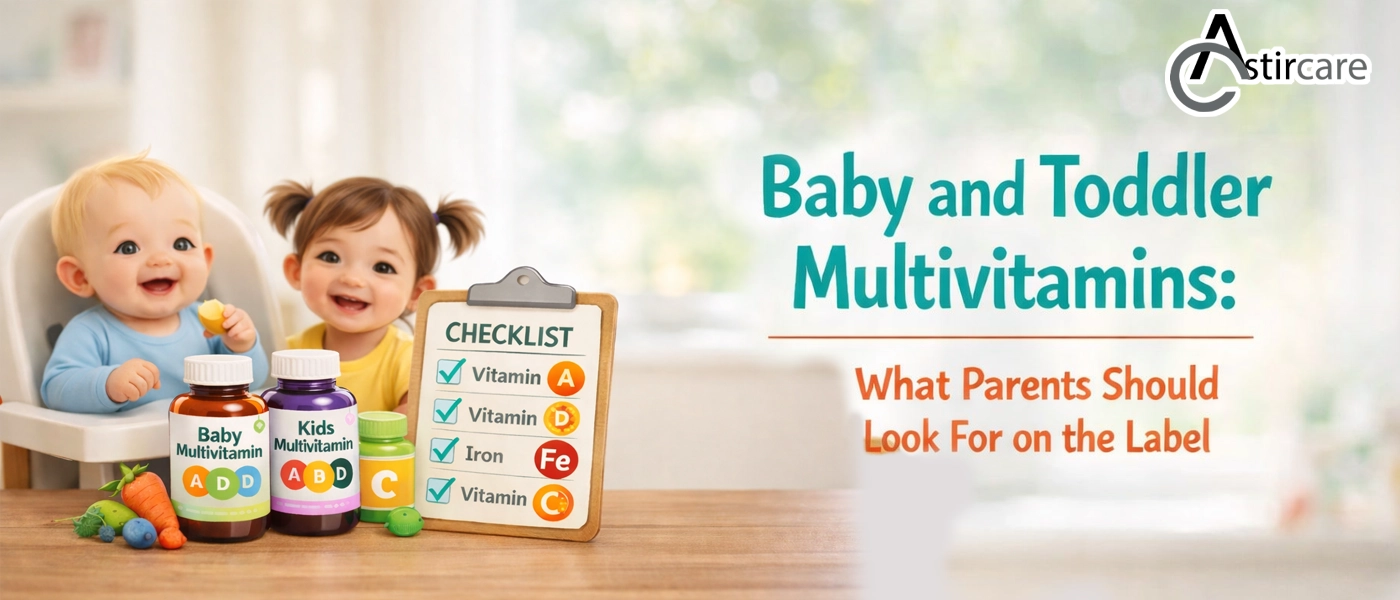
Baby and Toddler Multivitamins: What Parents Should Look For on the Label
31 Dec 2025On a quiet evening, you hold a small bottle of vitamin drops in one hand and your baby in the other. The label lists letters, numbers, and unfamiliar ingredient names, and another bottle on the shelf promises “extra goodness” with a different dose. It feels like guessing. Vitamin drops for babies support healthy growth only when the ingredients and dosage match what your baby needs, not just what the label claims. This guide provides a straightforward way to compare vitamin drops for babies by ingredients, dosage, and actual benefits, so your choice feels clear and confident, not stressful.
Ingredients: what really sits inside vitamin drops for babies
-
-
Core vitamins you nearly always see
- Most vitamin drops for babies include vitamins A, C, and D because UK guidance highlights these nutrients for young children.
- Vitamin D supports normal bone and tooth development and helps the body use calcium and phosphate well.
- Vitamin A supports normal vision, skin, and immune function, while vitamin C supports immunity and helps the body absorb iron from food.
-
Extra vitamins and minerals in multivitamin drops
- Some baby vitamin drops add B‑vitamins such as B1, B2, B6, B12, niacin, folic acid, and pantothenic acid; these support energy release and the normal function of the nervous system.
- Other products add vitamin E or minerals such as iron or zinc, which support red blood cell formation, cognition, or immune defence.
-
- Use this rule of thumb:
-
-
- Choose a simpler A+C+D formula if your baby feeds well and has no special dietary restrictions or deficiencies.
- Consider a broader multivitamin liquid only if a health professional suggests extra support because of fussy eating, restricted diet, or medical needs.
-
-
Carriers, sweeteners, and flavourings that can matter
- Vitamins need a base to sit in; many vitamin drops for babies use vegetable or sunflower oil, while some use soya or peanut oil, which may not suit families with allergies.
- Sweeteners and flavourings help babies accept the taste; some products use sugar, others use sugar‑free sweeteners or mild fruit flavours.
- When you compare bottles, scan for:
- Type of oil or liquid base.
- Presence of sugar, sweeteners, or both.
- Any artificial colours or preservatives that you prefer to avoid.
-
“Free from” and dietary labels that guide quick filtering
- Many products now highlight “sugar‑free”, “no artificial colours”, “dairy‑free”, “gluten‑free”, “vegan”, or “halal”.
- Before you shop, list your non‑negotiables, such as nut‑free, vegetarian, or halal, then remove any vitamin drops that fail these checks, even if the nutrient profile looks good.
Dosage: concentration, daily amounts, and age bands
-
Concentration vs daily dose: the key difference
- Every bottle lists how much of each vitamin sits in a given amount, for example, micrograms of vitamin D per drop or per millilitre.
- One product may give 10 micrograms of vitamin D in 5 drops, another in 0.5 ml, and a third in 1 ml. The benefit is the same, but the daily serving size changes, which affects how easy the dose feels in daily life.
-
Age groups and feeding patterns you must match
- UK guidance says that breastfed babies from birth to 1 year need a daily vitamin D supplement of 8.5–10 micrograms.
- Babies who drink more than 500 ml of infant formula a day usually do not need extra vitamin drops because formula already includes vitamins A, C, and D in set amounts.
- From 6 months to 5 years, most children need a daily supplement with vitamins A, C, and D unless a healthcare professional advises otherwise.
-
Simple examples of how to match the label
- Example 1: Your 8‑month‑old is mainly breastfed. You pick a vitamin drop that gives 10 micrograms of vitamin D in 5 drops once a day and follow that amount.
- Example 2: Your 2‑year‑old eats some solids but is a picky eater. You choose a multivitamin liquid that gives vitamin A, C, and D plus B‑vitamins in 5 ml once a day and check that vitamin D still sits near 10 micrograms per daily dose.
- For any product, check that the daily dose for your child’s age does not exceed the suggested 10 micrograms of vitamin D unless a doctor or specialist clearly directs you.
-
Avoiding double-dosing across products
- Many families use more than one supplement, such as cod liver oil plus a multivitamin or fortified formula plus vitamin D drops.
- To avoid overdose, write down all products your baby takes and note how much vitamin D and vitamin A each one provides per day.
- If totals rise above the target, remove or adapt one product after speaking to a health visitor, GP, or pharmacist so that you reach the recommended intake from combined sources, not double or triple that amount.
Comparing labels: a step‑by‑step way to line up two bottles
-
Step 1: Write down the nutrients in both products
- Place two bottles of vitamin drops for babies on the table and list vitamins and minerals in a quick two‑column note.
- Mark, which one offers A+C+D only, and which one adds extra B‑vitamins, vitamin E, or minerals such as iron or zinc?
- Decide which column better fits your baby’s needs today, based on diet and any professional advice.
-
Step 2: Compare the amounts per daily dose, not per drop
- Look at the “per daily dose” line on both labels and copy the amounts for vitamins A, C, and D into your note.
- Cross out any product that gives more than the recommended 10 micrograms of vitamin D per day unless a healthcare professional suggests a different target.
- If both products meet the same targets, favour the one that reaches them with the smallest, simplest dose your family can remember.
-
Step 3: check carriers, allergens, and “free from” claims
- Scan the ingredients list for nut oils, soya, or other allergens that matter to your household; cross off any product that raises concern.
- Confirm that any “vegan”, “vegetarian”, “halal”, or “kosher” claims match your needs by looking for clear text or symbols on the pack, not just brand names.
-
Step 4: consider storage, shelf life, and price per month
- Some vitamin drops need fridge storage once opened, while others can live in a cupboard; choose what fits your kitchen and travel habits.
- Check the “use within X months of opening” line and compare this with how often you plan to give the drops; longer shelf life suits occasional use, shorter shelf life suits daily use.
- Work out a rough price per month by dividing the bottle cost by the number of days of doses; this helps compare a small, strong bottle with a larger, weaker one.
Dosage in real life: how easy is daily use?
-
Measuring the dose on a busy day
- Vitamin drops for babies use tools such as pipettes, droppers, syringes, or spoons; each one affects how fast and accurately you can be when your baby is tired or restless.
- Syringes with clear ml markings work well for very young babies because they keep doses accurate even with small volumes, while spoons often suit toddlers who already accept medicine by mouth.
-
Giving the drops without a fight
- Labels may suggest that you place drops straight into the mouth, onto a spoon, or mix with a small volume of milk or cooled boiled water. Follow product guidance and healthcare advice, especially for very young babies.
- Taste and texture matter. Fruity or slightly sweet liquids can be easier for many babies, while neutral or oily drops may need a small drink afterwards. When testing a new product, observe how your baby reacts over a few days before deciding it “does not work”.
-
Choosing a routine that keeps doses consistent
- Once‑daily vitamin drops fit well into existing habits, such as the morning feed or bedtime feed, and make it easier for multiple carers to remember the dose.
- Products that need more than one daily dose can still work, but they demand more tracking; they may suit families already managing a structured medication schedule, but feel heavy for others.
- When in doubt, for routine use choose the product that meets your nutrient targets with the simplest schedule you can stick to every day.
Real benefits: what parents fairly expect from vitamin drops
-
Support for bones, teeth, and growth
- A daily vitamin D dose in the recommended range supports normal bone mineralisation and tooth development and lowers the risk of rickets in babies and toddlers, especially in countries with limited sunlight at certain times of year.
- Combined with enough calcium from milk or formula, vitamin D helps your baby reach strong bones without depending on sunshine alone.
-
Backup for diet and immune function
- Vitamins A and C in baby drops back up home diets that sometimes lack variety, especially when babies go through fussy phases, or illness reduces appetite.
- In multivitamin drops, B‑vitamins support normal energy release and nervous system function, while iron or zinc may support red blood cell formation and immune defence when intake from food is low.
-
What vitamin drops cannot replace
- Vitamin drops for babies do not treat infections, cure feeding problems, or replace medical care; they support good nutrition alongside breastfeeding, formula feeding, and age‑appropriate solid foods.
- A long ingredient list or “extra strength” claim does not always mean better results. A product that clearly matches guidance on ingredients and dosage usually serves your baby better than a complex formula that exceeds safe daily amounts or adds nutrients your baby does not currently need.
Compare baby vitamin drops with confidence
You want vitamin drops for babies that match real needs, not just bold words on a label. When you compare ingredients, dosage, and real benefits step by step, the choice becomes more straightforward. Use the checklist in this guide as you browse baby vitamin drops, read each label, and match products to your baby’s age, feeding pattern, and any professional advice. Focus on clear nutrients, sensible daily doses, safe ingredients, and a routine you can follow every day. If anything on a label feels unclear or your baby has special health needs, speak with your health visitor, GP, or pharmacist before you decide.




Leave a Comment